
Headings help users and search engines to read and understand text. For example, they act as signposts for the readers and make it easier for them to figure out what a post or page is about. Headings also define which parts of your content are important, and show how they’re interconnected.
Headings and subheadings represent the key concepts and supporting ideas in the paper. They visually convey levels of importance. Differences in text format guide readers to distinguish the main points from the rest. Headings are generally bigger, if not more conspicuous, than subheadings.
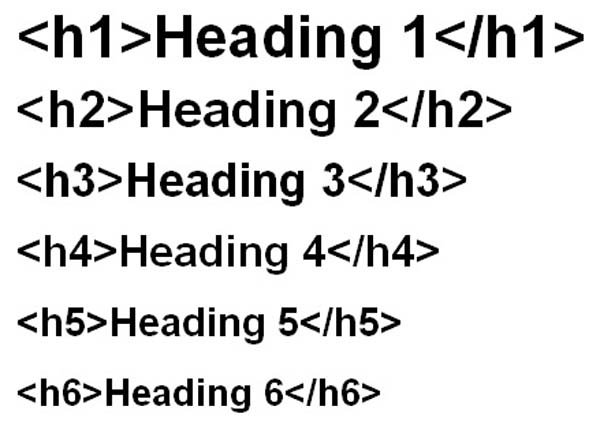
In the simplest of terms, heading tags function as indicators utilized in HTML code to help structure your website or page in a way that allows Google to read and understand your content. More specifically, each HTML heading tag ranges from H1 to H6 tags in order to create a hierarchical structure to your page.
The H1 heading tag is the most important in the eyes of Google (and every search engine) as they form the title of the page and tell the algorithm what the content is about. The H2 tag and H3 tag then explain to the search engine the importance of each piece of content in order. You can as far down as H4 tag, H5 tag, H6 tag depending on the structure of your article. This heading hierarchy is an SEO best practice that all the best websites use to rank.